Quick answer
Yes, a trading business can get a 200k business loan, often without property. But $200k is where the market splits. One major bank lends unsecured up to $200k and may want a general security agreement above it. To carry $200,000 comfortably, most businesses need monthly deposits well above $60,000, or a longer term with security to lighten each repayment.
Key points
- $200k sits right on a common bank line: unsecured below it, a general security agreement possible above it
- Existing lending with the same lender can count towards that line
- Over 36 months, $200k plus costs can mean a repayment of around $7,700 a month (illustrative)
- Unsecured still usually means a director's or personal guarantee
- Search the PPSR for your own business before you apply, so nothing on the register surprises you
Two hundred thousand dollars. It’s a second site, a fleet upgrade, a production line, a serious stock commitment. It’s also the exact number where business lending changes gear. Under it, plenty of lenders will happily lend on your bank statements alone. Over it, the word “security” starts turning up in the paperwork.
So a $200k business loan really asks two questions. Can your turnover carry it? And what will the lender want behind it? Let’s take them one at a time.
Can I get a 200k business loan without property?
Yes, quite often. Unsecured, cash-flow and line-of-credit options typically run from $5,000 to $500,000, sized on turnover and bank statements. $200k sits comfortably inside that.
But look closely at how the big banks draw their lines, because it explains why this amount behaves differently from $100k:
- ANZ says you “won’t need to provide an asset to secure your loan up to $200k”, and that for loans between $200k and $500k “you may need to provide a General Security Agreement (GSA)”. Its FAQ adds that existing ANZ business lending is counted with the new amount when deciding (ANZ unsecured business loans).
- Westpac’s unsecured business loan runs from $5k to $250k over 1 to 5 years. It asks for 12 months’ trading, turnover above $75k, GST registration, and ATO payments, loan repayments and employee entitlements (super included) that are up to date (Westpac eligibility).
Two takeaways. First, if you already owe that lender $40k on an overdraft, a “$200k” request might really be a $240k one in its eyes. Second, that ATO line is timely. The July to September BAS is due on 28 October for most businesses that lodge themselves. Lodge it and pay it, or get a payment plan in place, before you apply. Non-bank lenders set their own rules, and past credit issues and ATO debt are looked at case by case, but a tidy ATO account helps everywhere.
Myth or reality: “Unsecured means nothing of mine is on the line.”
Myth. Unsecured means no mortgage over property. It doesn’t mean no promise. Both banks above say director or personal guarantees may be required, and most non-bank lenders ask for one too. If the business can’t pay, the guarantor can be pursued. Go in with eyes open.
Why is $200k where lenders start asking for security?
Because the repayment gets big enough that a lender wants something to fall back on, and property isn’t the only option. The middle ground is a general security agreement.
A GSA gives the lender a security interest over the business’s personal property: equipment, vehicles, stock, receivables, sometimes “all present and after-acquired property”. It’s registered on the Personal Property Securities Register (PPSR), where other lenders and suppliers can see it. It doesn’t touch your home. Land and buildings need a mortgage or caveat instead.
Here’s the step most owners skip. Before you apply, run an organisation grantor search on your own ABN or ACN. The register lets anyone search by organisation identifier, and it only returns interests filed against the identifier you enter, so check both if you have both (PPSR organisation grantor search). Equipment financiers, old lenders and suppliers with retention-of-title terms often have registrations you’ve forgotten about. A new lender will find them. Better you find them first and explain, or get stale ones removed.
What are the repayments on a $200,000 business loan?
Forget the rate. Take the total you’ll repay and divide it by the months. That’s what leaves your account.
Repayment reality check (illustrative)
The figures below are made up to show the method. Total cost of finance means the loan cost plus every fee, in dollars.
| $200k over… | 24 months (unsecured) | 36 months (unsecured or GSA) | 60 months (GSA or property) | 120 months (property-backed) |
|---|---|---|---|---|
| Total cost of finance (made up) | $50,000 | $76,000 | $110,000 | $190,000 |
| Total to repay | $250,000 | $276,000 | $310,000 | $390,000 |
| Monthly repayment | about $10,400 | about $7,700 | about $5,200 | about $3,250 |
| Weekly equivalent | about $2,400 | about $1,770 | about $1,190 | about $750 |
See the pattern? Each step out roughly trims the monthly hit and adds to the bill. The ten-year column is the gentlest month to month, and in this example it costs $140,000 more than the two-year column. Security is what makes the longer terms possible, so the “do I offer security?” question and the “what can I afford each month?” question are really one question. The business loan repayments page covers weekly, fortnightly and monthly options.
Pit stop: Wondering which column your business belongs in? Send us your average monthly deposits and what the $200k is for, and an expert will work through it with you. Check your options in 60 seconds. Asking doesn’t touch your credit file.
How much turnover do I need for a 200k business loan?
Flip the table around. Our 1-2-3 Loan Repayment Planner reads a repayment under 8% of monthly turnover as cruising and 8–15% as workable for many businesses. Here’s the monthly deposit figure each column needs to land at 8% and at 12%:
| Repayment (from above) | Deposits a month for 8% | Deposits a month for 12% | Annual turnover at 12% |
|---|---|---|---|
| About $10,400 (24 months) | about $130,000 | about $86,700 | about $1.04 million |
| About $7,700 (36 months) | about $96,300 | about $64,200 | about $770,000 |
| About $5,200 (60 months) | about $65,000 | about $43,300 | about $520,000 |
| About $3,250 (120 months) | about $40,600 | about $27,100 | about $325,000 |
These bands are a rough guide, not a lending rule, and turnover isn’t profit. A wholesaler on a thin margin feels 10% far more than a consultancy does. Still, the table gives you a fast gut check. A business turning over $600,000 a year will find a two-year, $200k loan very tight, but five years with a GSA might sit fine.
For the full picture of turnover-based and equity-based sizing, see how much your business can borrow. If $200k feels like a stretch, our 100k business loan guide runs the same maths at half the size.
Unsecured, GSA or property-backed: which suits $200k?
| Unsecured | Secured by a GSA | Property-backed | |
|---|---|---|---|
| What’s behind it | Your bank statements and a guarantee | Business assets, registered on the PPSR | A mortgage or caveat over residential or commercial property |
| Typical terms | Shorter | Can run a little longer | Can run much longer |
| Monthly feel | Heaviest | Middle | Lightest |
| Extra paperwork | Often BAS or financials at this size | Asset details, PPSR checks | Valuation, title, everyone on title signs |
| Watch for | Guarantees, early payout costs | What “all assets” captures, future borrowing limits | Valuation, legal and discharge fees, a clear exit |
Unsecured business loans suit strong, steady deposits and a short payback. Secured business loans put business assets to work for a longer term. Property-backed business loans give the lightest repayment, and property-secured lending runs from $20,000 to $5,000,000, so $200k is well within range.
Whichever way you go, read the contract properly. ASIC’s unfair contract term protections cover loans with an upfront price up to $5,000,000 where the business has fewer than 100 staff or turnover under $10 million. Worth knowing if a clause about security or default looks one-sided.
Worked example: the brewpub and the canning line (illustrative)
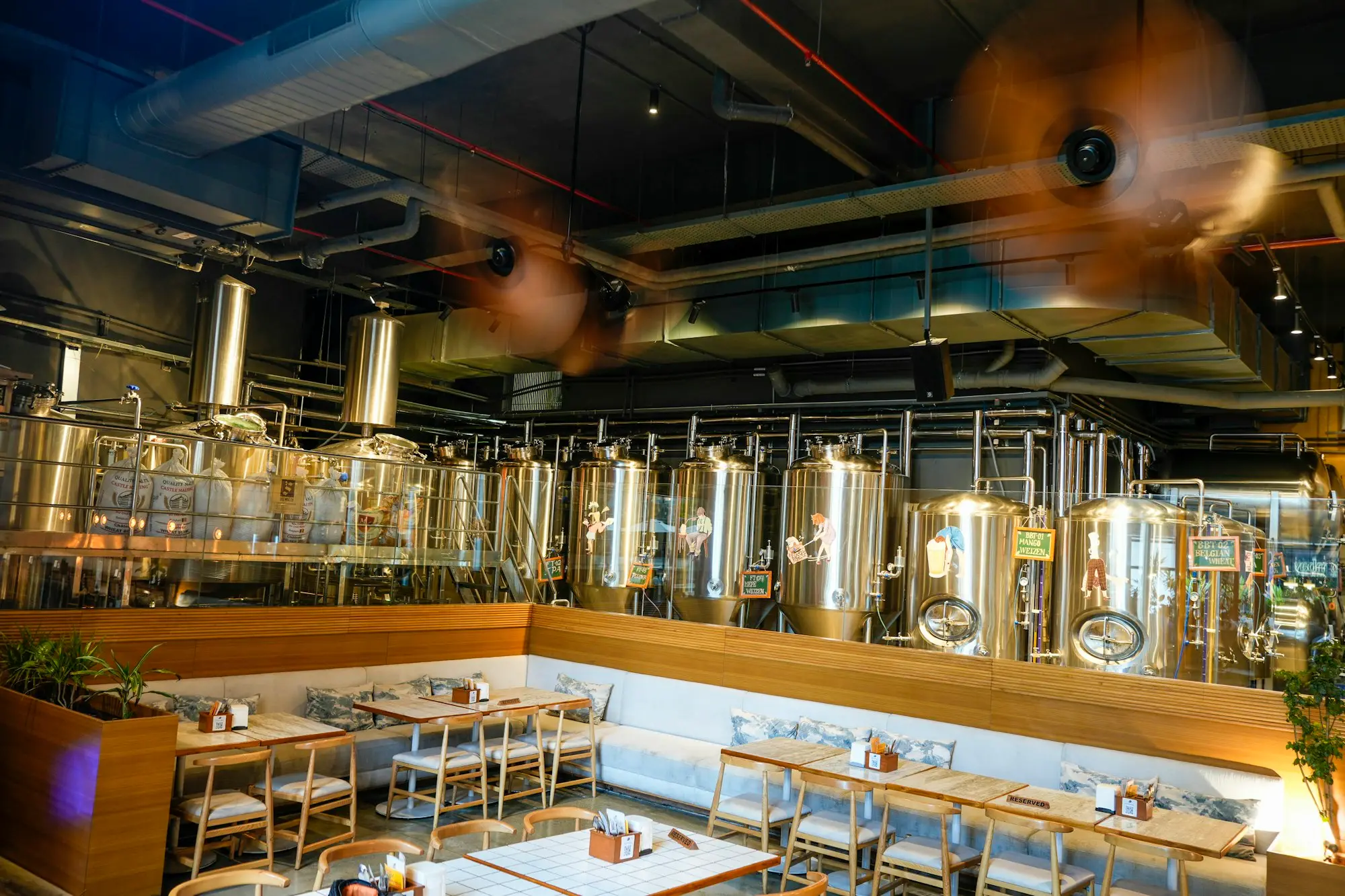
A made-up brewpub banks about $120,000 a month on average. June to August drops to around $85,000. It already pays $2,000 a month on an equipment lease for its kitchen. It wants $200k for a canning line and two more fermenters so it can sell into bottle shops.
Option 1: unsecured over 36 months. About $7,700 a month, or 6.4% of an average month. In winter, with the lease, about $9,700, or 11.4% of deposits. Workable, but tight once wages and super go out with every pay run.
Option 2: GSA over 60 months. About $5,200 a month, or 4.3% on average. In winter, with the lease, about $7,200, or 8.5%. Much calmer. The catch: the GSA could cover the existing tanks and the new kit, and the lease financier already has a PPSR registration over the kitchen gear. A quick grantor search shows exactly what’s there before anyone asks.
Option 3: stage it. Borrow about $130k now for the canning line, which earns from its first bottle-shop order. Add the fermenters in the second year off a clean repayment record.
The brewpub chose option 2. It costs more in total, but it doesn’t flinch in July. The lesson: size $200k for your slowest quarter, not your best one. The repayment comfort test shows how to stress-test a slow month step by step.
What our expert will ask you on the call
Have rough answers ready for step 2:
- What does the business bank in a normal month, and in the slowest?
- What will the $200k buy, and when will it start earning?
- What do you owe now, including leases, merchant advances, overdrafts and ATO plans?
- Is your September quarter BAS lodged and paid, or on a plan?
- Have you checked the PPSR for registrations against your business?
- Do you own property, and roughly what’s owed on it?
- Would you rather keep assets clear, or trade security for a lighter repayment?
Ballpark figures are fine. Honest ones are better.
Ready to find out what $200k looks like for your business?
Two hundred grand is a big step, and the right structure matters as much as the yes. Unsecured, a GSA or property behind it: each one changes the monthly number, and getting that right is the whole job. Matching the loan to what your business can actually carry is exactly what we do.
Let’s see if you qualify. The enquiry takes about 60 seconds, and simply asking won’t leave a mark on your credit score. Your details go to us, not round a pile of lenders, so your phone won’t light up with strangers. A real person reads your enquiry, looks at your deposits, your existing debts and what the money is for, and then calls you. Please fill the form in accurately, especially your average monthly deposits and current repayments, so we can line up the right $200k structure the first time.
Frequently asked questions
Can I get a 200k business loan without property?
Often, yes. Unsecured options typically run from $5,000 to $500,000, so $200k is inside the range. Expect a director's or personal guarantee, a close look at your bank statements, and possibly a general security agreement over the business's assets instead of a mortgage over property.
How much turnover do I need for a 200k business loan?
Bank products can have entry minimums as low as $75,000 a year, but that only gets you in the door. In our illustrative example, a 36-month repayment of about $7,700 a month needs roughly $64,000 to $96,000 in monthly deposits to sit at 8–12% of turnover. A longer term needs less.
What are the monthly repayments on a $200,000 business loan?
It depends on the term and the total cost of finance. In our made-up example, $200k costs about $10,400 a month over two years, $7,700 over three years, $5,200 over five years and $3,250 over ten years on a property-backed loan. Always work it out from each offer's total repayable amount.
What is a general security agreement on a business loan?
A GSA gives the lender a security interest over the business's personal property, such as equipment, stock, receivables and sometimes all present and after-acquired property. It's registered on the Personal Property Securities Register. It doesn't cover your house, which would need a mortgage or caveat.
Is a 200k unsecured business loan harder to get than 100k?
Usually a little. The repayment doubles, so your bank statements have to show more headroom, and some lenders ask for BAS, financial statements or a tax portal statement at this size. A clean ATO account and no surprise debts on your statements help a lot.
Should I split $200k into two smaller loans?
Sometimes staging works: borrow what earns first, then top up once there's a run of clean repayments. Two loans from different lenders can complicate security and debit dates, though. Ask what each structure costs in total dollars before deciding.